Rakefet Cohen Ben-Arye
What if one of the most effective interventions for growing the vegan market wasn't a new protein technology, a celebrity campaign, or a policy change, but a button?
That's one of the more striking findings from a survey I recently published in Faunalytics, exploring the landscape of veganism in China. We surveyed participants from the China Vegan Summit and V-March, a lunar-calendar-aligned month-long vegan challenge. What we found offers both practical insights for advocates and a compelling case for a simple, low-cost behavioral intervention: the vegan filter.
China's Vegan Market: Bigger Than You Think
China's vegan and vegetarian food market grew from roughly $10 billion in 2018 to about $12 billion in 2023. About 4–5% of the population, somewhere between 56 and 70 million people, identifies as vegetarian or vegan. Millennials and Gen Z are leading this shift, with health as the primary driver.
The Chinese government is paying attention too. China's Ministry of Agriculture and Rural Affairs has explicitly stated its intent to "develop new food resources such as plant-based meat," and Chinese institutions hold eight of the top 20 cultivated meat patents globally. This isn't a fringe movement. It's a growing market with institutional backing.
What the Survey Found: Health First, Tofu Always
We collected responses from 181 participants at the China Vegan Summit, actual conference attendees rather than online survey recruits, a distinction that matters for ecological validity.
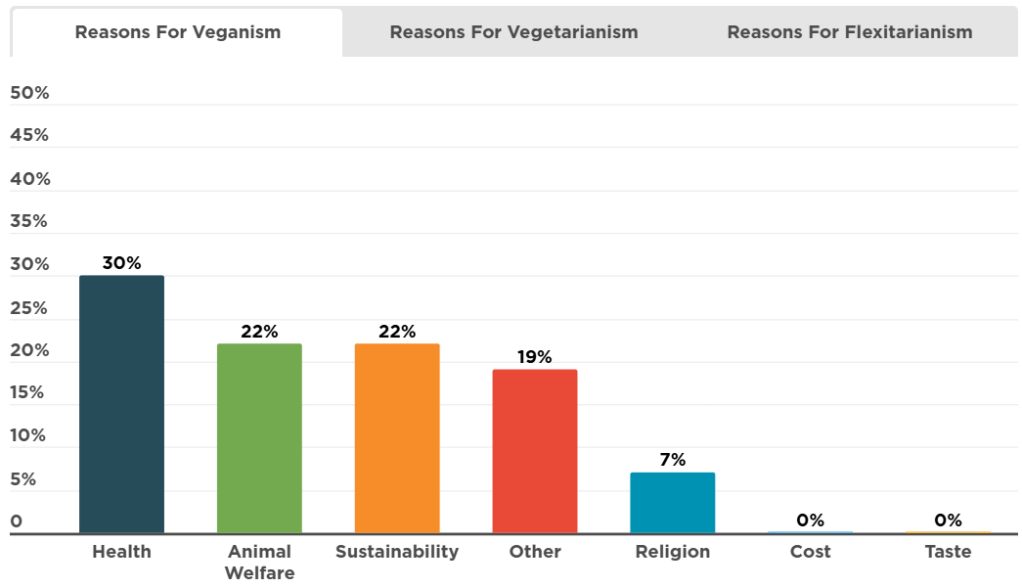
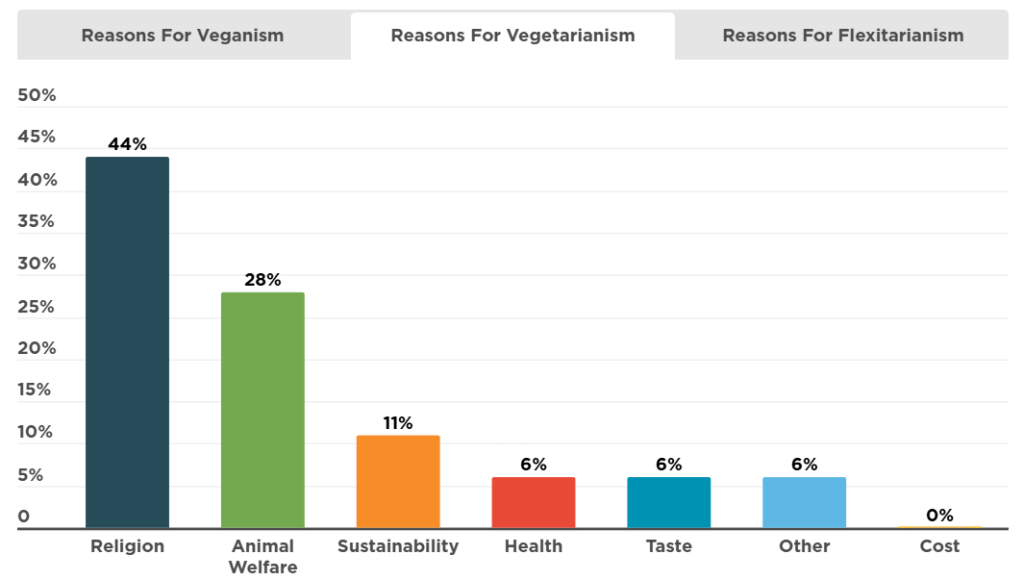
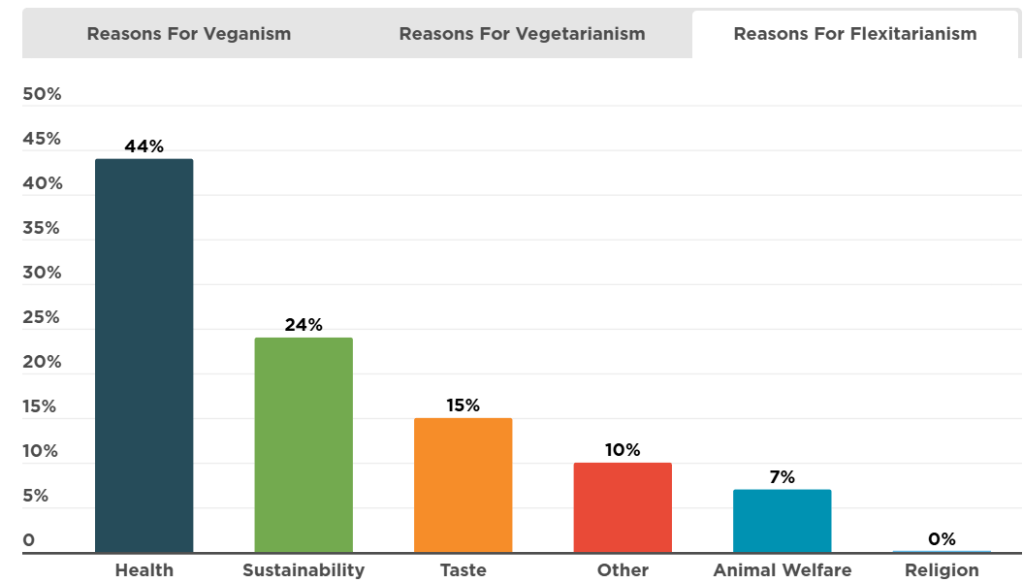
The most consistent finding: health, not animal welfare, is the primary driver of veganism and flexitarianism among Chinese speakers. Religion was the leading reason for vegetarianism. This has real implications for advocacy messaging: framing plant-based diets around health benefits is likely to be far more effective in this context than animal welfare appeals.
On product preferences, the data was equally clear. Chinese consumers prefer non-mimetic options like tofu over high-mimicry alternatives such as Impossible Burgers or convincing "chicken" products. Soybeans carry centuries of cultural legitimacy in China; high-tech meat analogs don't, at least not yet.
Interestingly, flexitarians and vegetarians were actually more put off by insect protein than by conventional meat, and they showed a clear preference for 100% meat over blended meat-plant products. For companies and advocates advising the industry, this is worth noting: the path forward in China likely runs through tofu, not through trying to replicate a Western consumer playbook.
The Core Barrier: Can't Find It in the Supermarket
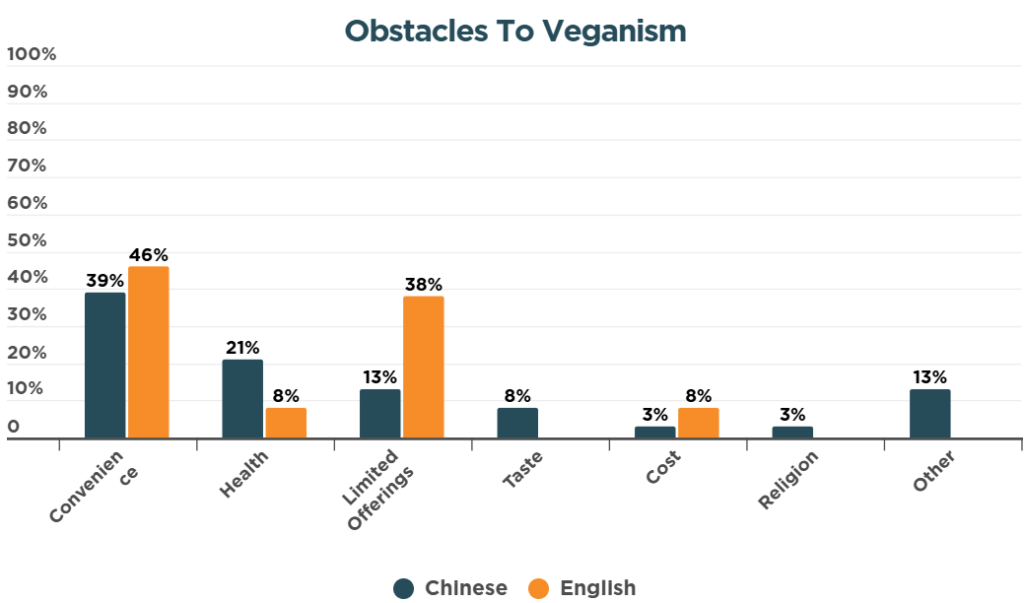
Across both groups surveyed (Summit attendees and V-March participants), the most commonly cited challenge was finding vegan products in supermarkets. Not restaurants, not social pressure, not cost: the supermarket.
For women specifically, the social dimension of eating was also a significant barrier. But the primary friction point remains the same: people don't know which products are vegan, and they can't easily find out at the point of purchase.
This is a classic behavioral bottleneck. The motivation to change exists. The identity, at least in this sample, is present. What's missing is the infrastructure that makes the right choice the easy choice.
The Vegan Filter: 90%+ Demand, Low Cost, High Leverage
Here is where the data becomes genuinely striking.
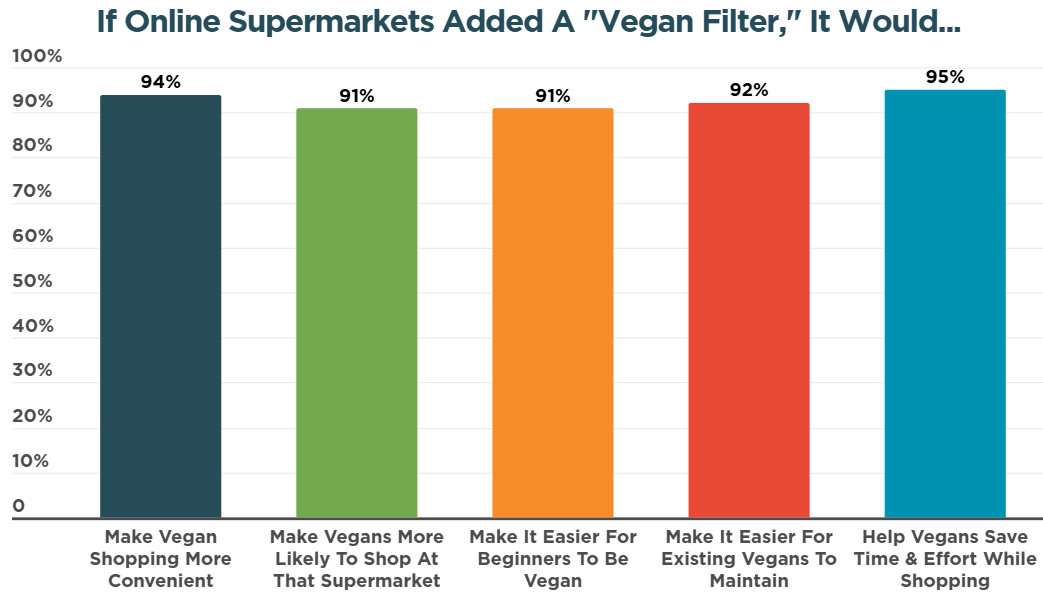
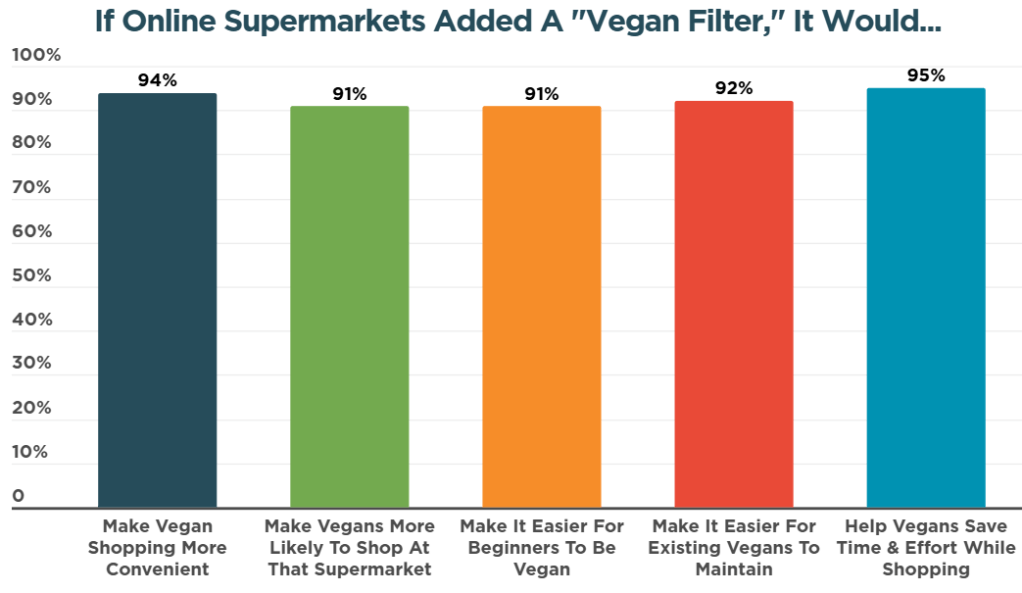
We asked participants whether they would want a vegan filter button in online supermarket shopping. The responses were overwhelming:
-Help vegans save time and effort: 95%
-Make vegan shopping more convenient: 94%
-Make it easier for existing vegans to maintain their diet: 92%
-Make vegans more likely to shop at that supermarket: 91%
-Make it easier for beginners to start: 91%
Over 90% agreement across every single category. This is the kind of consensus that rarely appears in survey research.
Compare that to vegan certification: only about half of the participants indicated a high need. Three-quarters indicated maximum need for an online vegan filter. The filter outperformed certification as a perceived solution by a wide margin.
The vegan filter is not a radical idea. It is a sorting function, the kind that already exists on every major e-commerce platform for price, brand, dietary restrictions, and product category. What's missing is someone deciding that vegans, as a consumer group, deserve their own filter. The data suggests this decision would be welcomed by the very shoppers it targets and likely keep them loyal to the platform that offers it.
Why This Matters for Advocacy and Policy
This research is part of a broader project I have been developing: the Vegan Filter initiative, which proposes embedding vegan filtering functionality into online supermarket platforms as a low-cost, high-impact behavioral intervention.
The logic is straightforward. Friction is one of the most powerful forces shaping consumer behavior. When making a vegan choice requires effort, scrolling, label-reading, and uncertainty, fewer people make it. When the vegan option is one click away, adoption goes up, maintenance improves, and beginners have a starting point.
The survey data from China provides what advocates often struggle to produce: direct consumer demand data showing that the target population wants this solution, across every relevant subgroup.
For funders and organizations looking to support high-leverage interventions in plant-based advocacy, this is a case where behavioral science, market conditions, and consumer data all point in the same direction.
Key Takeaways
Health is the message that lands. Animal welfare framing, while morally compelling, is unlikely to be the primary motivator for most Chinese consumers shifting their diets.
Tofu is the product. Non-mimetic, culturally familiar proteins outperform high-tech alternatives in consumer preference.
The supermarket is the bottleneck. Improving the vegan shopping experience, particularly online, is the highest-leverage point of intervention.
The vegan filter works. Consumer demand for a simple online filter button is overwhelming, and it addresses the primary barrier people report.
Read More
The full Faunalytics article, including interactive charts and the complete report, is available here.
The full survey report is available for download here.
Rakefet Cohen Ben-Arye is a social and organizational psychologist whose research focuses on behavioral interventions, plant-based diet adoption, and animal advocacy.
לגלות עוד מהאתר Rakefet Cohen Ben-Arye
יש להירשם לעדכונים כדי לקבל את הפוסטים האחרונים לאימייל שלך.
