אשמח לעשות highlight למחקר של Matti Wilks על השאלה האם סוגנות היא מולדת או נרכשת – לסרטון המקורי.
היא מציגה את מה שכבר נמצא, שסוגנות היא כשל פסיכולוגי שאכן קיים ולא רק ברמה הפילוסופית, מעבר לאינטליגנציה וליכולת לחוש כאב הנתפסות על ידי הנבדקים. דהיינו, גם בהנחה שבעל חיים אחר הוא אינטליגנטי ובעל יכולת לחוש כאב ממש כמו בן אדם, אנשים עדיין מאמינים שיש לתעדף בני אדם על רקע מין ביולוגי בלבד.
נשאלת השאלה אם כן האם סוגנות היא מולדת או נרכשת עם החינוך כי היה אפשר לחשוב על עולם שבו האבולוציה מכתיבה לנו רמה מקסימלית של סוגנות כבר בלידה משום שזה מועיל יותר לגנים שלנו.
בקצרה, היא מצאה שסוגנות היא נרכשת.
היא חילקה נבדקים לילדים (גילאי 5-9) / מבוגרים והציגה להם תסריט שבו 2 ספינות טובעות – אחת מלאה בבני אדם ואחת בחזירים (בגרסה אחרת – כלבים) עם מספר אחר של בני אדם לעומת בעלי חיים בכל פעם (בן אדם אחד מול חזיר אחד, בן אדם אחד מול 100 חזירים וכן הלאה) ומצאה שלילדים, בניגוד למבוגרים, יש סיכוי יותר גבוה לרצות להציל את המספר הרב יותר של נפשות, לא משנה לאיזה מין ביולוגי הן שייכות.
השלכות: צריך לפנות לילדים, אם כי לדעתי ייתכן שעדיף בני נוער כי להם יש יותר אוטונומיה באשר לתזונה שלהם, הם יותר יכולים להפיץ טבעונות ברשתות חברתיות ויותר סיכוי שיהיו אקטיביסטים. אם מוסיפים את הגישה המוסדית שהתנועה לזכויות בעלי חיים הולכת אליה (בגדול אומרת שאתה יכול לפנות ללקוח במסעדה אבל אתה יכול יותר אפקטיבי אם תפנה לשף ועוד יותר אם תפנה לשף שמאמן את השפים, כמו שאורי שביט, גילי מילר ורבים וטובים נוספים כבר מיישמים), אולי זה אומר לפנות למורים ומנהלים של בתי ספר. יש מגוון של מוסדות שכבר פנו אליהם עם תוכניות להפחתת בשר – בתי חולים, בתי סוהר (בטיעון החיסכון הכלכלי וגם הפחתת האלימות) אך נראה שלבתי ספר יש פוטנציאל מיוחד. ישנן בארץ פנימיות ובתי ספר נוספים שמגישים ארוחות בבתי ספר בנוסף להסברה שניתן להכניס. תזמון הוא הכל. חשוב לתזמן את ההסברה לגיל בו הנמען הכי פתוח לשמוע את המסר.
מטרת העל: קידום אופציות צמחוניות בעזרת שני צמחוני ברשת המזון סודקסו
שאלה 1: האם הסניפים ימשיכו לקדם שני צמחוני?
שאלה 2: האם יש הבדל בין סניפים הפונים למגזרים שונים?
שאלה 3: האם המכירות יושפעו בעקבות שני צמחוני?
שאלה 4: מה הייתה חוויית הצרכנים?
כן.
כן. שירותי בריאות הראו תוצאות טובות יותר מהשירות לעסקים.
רוב האתרים לא דיווחו על שינוי ואתר אחד דיווח על עליה במכירות.
חוויית הצרכנים נטתה מעט לקוטב החיובי.
תקציר: לאחר שנה שלמה של יישום, יוזמת שני צמחוני לשיפור הבריאות והרווחה של סודקסו במחוז הצפוני התקבלה יפה והצליחה להניע לקוחות לאכול ארוחות המבוססות יותר על הצומח. לפי סקר שכלל 245 אתרי שירות של מזון מ-38 מדינות, מעל ל-50% ראו שיפור במכירות הירקות ו-24% הבחינו בירידה בבחירת הלקוחות באופציות בשריות.
מבוא: בשנת 2000 המליץ Surgeon General David Satcher, MD, כי האמריקאים יפחיתו את צריכת השומן הרווי שלהם ב-15%. בעקבות כך הכריז Dr. Robert S. Lawrence, מנהל מרכז ג'ון הופקינס, כי כמעט כל השומן הרווי מגיע מבשר וחלב עתיר שומן. הוא הוסיף כי קיצוץ יום אחד של תזונה בשרית בשבוע יכול לעזור לאמריקאים להגיע למטרת ההפחתה במאמץ מועט ושני צמחוני נולד, כמו גם עמותה בשם זה. מרכז ג'ון הופקינס משמש לייעוץ מדעי בנושא. שני צמחוני נמצא תחת יוזמת המטריה שני בריא, Healthy Monday.
שיטות: סודקסו החל לראשונה ביוזמת שני צמחוני בינואר 2011. החברה הגלובלית לשירותי המזון, התקנים ואנרגיה המגישה למעלה מ-9.3 מיליון ארוחות ליום מעודד את אתריה לקדם ולהוסיף את אפשרות המנות הראשונות מהצומח לתפריטיה מדי שבוע ואת חשיבות העלאת צריכת הפירות והירקות.
את שני צמחוני היא השיקה כחלק מתוכנית מחר יותר טוב על מנת לקדם אופציות מזון בריאות יותר עבור עובדיה ולקוחותיה. ערכת שני צמחוני נשלחה בינואר לכל חשבונות שירותי הבריאות של סודקסו כחלק מערכת הקידום של שליש השנה. עבור השירותים לעסקים והשירותים הממשלתיים, סודקסו השתמשה באסטרטגיית pull – פרסמה את חומרי שני צמחוני ברשת הפנימית שלה, שם היו זמינים להורדה. רבים מהחשבונות שהשתתפו ביוזמה המשיכו להציע בשר בימי שני אך העלו את זמינות האפשרויות הצמחוניות בהם. היישום נעשה על בסיס התנדבותי ולא ניתן כל תמריץ לסניפים.
במקביל סודקסו הריצה את שני צמחוני במוסדות חינוך עד כיתה ז' כולל (k-12) ב-8 מחוזות בתי ספר, מה שכלל קידום מסורתי של אופציות צמחוניות כמו גם שיווק חברתי מוגבר בנוסף לחומרי שני צמחוני. כמו כן, ננקטו שיטות כלכלה התנהגותית כמו מיקום מנות ראשונות צמחוניות בראש התפריט ומתן שמות חדשים ומזמינים למנות הצמחוניות.
הספקים סקרו את השתתפות התלמידים בתוכנית המזון תוך תשומת לב מיוחדת לתדירות בה בחרו באופציות צמחוניות וטבעוניות. בעוד שקמפיין בתי הספר לא נכלל בסקר ספקי שירותי המזון, תובנות מצד מפעילי השירות על מודעות וקבלת התלמידים את המאכלים מהצומח עשויים לספק מידע מפתח לכל המגזרים.
שאלות הסקר חוברו בשיתוף פעולה עם נציגי כל השירותים – בריאות, חינוך, עסקים וממשלה. משרד הקיימות והאחריות החברתית התאגידית ומומחים במחלקת מדידה והערכה של סודקסו עברו על הסקר ומשוב ניתן מצד שני צמחוני הלאומי ומרכז ג'ון הופקינס. הסקר הופץ פנימית ואלקטרונית באמצעות המייל למנהלים הכלליים של סודקסו בארה"ב שמילאו אותו בעצמם או העבירו אותו למילוי מנהל אחר.
800 שירותי חשבונות בריאות ו-1,000 שירותים לעסקים וממשלה קיבלו מייל. הסקרים נשלחו ביוני 2011 וניתנו 3 שבועות למילויים על לסגירתם.
תוצאות: 74% מבין המשיבים הציעו קידום זה באתרי הלקוחות שלהם – 77% בשירותי בריאות ו-72% בשירות לעסקים.
65% מהספקים המשיבים אמרו שימשיכו לקדם את שני צמחוני. 24% נוספים אמרו כי הם עשויים להמשיך לקדם את שני צמחוני בסניפיהם. רוב האתרים לא מצאו ירידה או עליה במכירות וחשבון אחד מצא כי לקוחות היו מוכנים לשלם עבור אופציות צמחוניות באותה מידה כמו עבור מנות בשריות. עובדה זו מציעה כי יוזמת שני צמחוני, בממוצע, משמרת את המכירות ועשויה להעלות את שביעות רצון הלקוחות. דעתי האישית היא שיכול להיות שזה נובע מלקוחות חוזרים של סודקסו שכבר רגילים, אוהבים וסומכים על רשת זו.
רוב אתרי שירותי המזון נחלקו בין שירות לעסקים (50%) ושירותי בריאות (47%), כאשר 3% הנותרים השתייכו לחשבונות ממשלתיים. נמצאו הבדלים חשובים בין מגזרים אלו. באופן כללי, חשבונות שירותי הבריאות הראו תגובה חיובית יותר לקמפיין ודיווחו על כמעט 40% תגובות חיוביות נתפסות של לקוחות. הן ספקי שירותים לעסקים והן ספקי שירותי בריאות הבחינו כי הם תפסו את הקמפיין כהפגנת המחוייבות של סודקסו לבריאות ורווחה והעידו כי עובדה זו היוותה יתרון מפתח של היוזמה.
תוצאות סקר שני צמחוני של אתרי לקוחות שירותי המזון של סודקסו מעידים כי יוזמה זו מקודמת ומוערכת על ידי הספקים, עובדה המציעה תמיכה ראשונית חזקה בתוכנית. בעוד שמנהלי חשבונות רבים העידו כי הבחינו בעליה ניכרת בקניות הירקות ובירידה ניכרת במכירות הבשר בזמן יישום הקמפיין, יש צורך במחקר נוסף על מנת למדוד את ההשפעות הממשיות של יוזמת שני צמחוני של סודקסו על רכישות, גישות והתנהגויות צרכנים.
נמצאו הבדלים חשובים בין חשבונות שירותים לעסקים ושירותי בריאות, בייחוד ביישום ותגובת צרכנים לשני צמחוני. המשיבים לסקרים ענו על בסיס התנדבותי והתוצאות נתונות להטיית המשיב; אין בנמצא דרך למדוד את תפיסת אלו שלא השיבו לסקר.
15% בלבד (119 חשבונות) השיבו לסקר בשירותי הבריאות ו-13% בשירות לעסקים (119 חשבונות) וממשלה – נראה כמו הטיית משיב גדולה. 90% היו מודעים לשני צמחוני באופן כללי ו-96% לשני צמחוני בסודקסו.
אלו שלא יישמו שני צמחוני בסניפיהם נימקו זאת בטיעונים הבאים: הצרכנים לא יאהבו אופציות צמחוניות, הם כבר מציעים מנות ראשונות צמחוניות, קיום יותר מדי יוזמות אחרות בו זמנית, קיום שישי צמחוני בייחוד בתענית לפני הפסחא.
הן סניפי שירותי בריאות והן שירות לעסקים ראו ביוזמה יתרון בריאותי גדול. סניפי שירותי בריאות ראו גם יתרון בהפחתת אכילת בשר ועידוד אכילת ירקות, מה שיכול להסביר למה סניפי שירותי בריאות תמכו יותר בשני צמחוני – 68% לעומת 46%.
77% מתומכי שני צמחוני אמרו כי קידומו יהיה קל או קל מאוד.
כמובן, לא ניתן לדעת סיבתיות – האם הקלות גורמת לתמיכה, האם התמיכה גורמת למחשבה שיהיה קל או האם סיבה שלישית גורמת לשתיהן.
באופן מפתיע, 20% יותר ספקים דיווחו על אתגרים ביישום שני צמחוני בשירותי בריאות בהשוואה לשירות לעסקים.
56% מהסניפים לא ראו שינוי בצריכת הבשר אך 30% ראו ירידה בצריכת הבשר, מתוכם 20% סניפים ראו ירידה של 6% ומעלה.
בחירת הירקות עלתה ב-49% מהסניפים כאשר 13 מדווחים על עליה של 6% ומעלה, לא השתנתה ב-46% וירדה ב-5%.
עם זאת, מה שלעתים הספקים עשו הוא לא להפחית לגמרי או אף בכלל את הבשר אלא רק להוסיף ירקות, מה שעשוי להסביר את העליה הגדולה יותר בבחירת ירקות לעומת הירידה בבשר. 17% מספקי שירותי הבריאות ראו עליה במכירות לעומת 14% בשירות לעסקים.
מבין אלה שדיווחו על ירידה במכירות הבשר, היה הפרש של 9% בסניפים ירידה במכירות הבשר לטובת שירותי בריאות בהשוואה לשירות לעסקים.
מבין הסניפים שדיווחו על עליה במכירות הירקות, נמצא הפרש של 8% עליה במכירות הירקות לטובת שירותי הבריאות לעומת השירות לעסקים.
36% מהספקים דיווחו על תגובות חיוביות או חיוביות מאוד מצד הלקוחות ו-40% על נייטרליות. 37% מהסניפים בשירותי בריאות ורק 21% מהשירות לעסקים דיווחו על תגובות חיוביות. הן סניפי שירותי הבריאות והן סניפי השירות לעסקים דיווחו על 26% תגובות שליליות. דווחו יותר תגובות נייטרליות בשירות לעסקים. אחד הסניפים הריץ סקר משל עצמו ומצא בו תמיכה חזקה לקמפיין ועליה של 5% בשביעות רצון הלקוחות. נימוקיהם: זמינות המנות הצמחוניות, קידום אורח חיים בריא, חינוך בנוגע להשפעות הסביבתיות.
דיון: התוצאות נראו חיוביות. חלק מהספקים רצו להרחיב את Healthy Monday ולאו דווקא את Meatless Monday. חלק כבר הציעו מנות צמחוניות ולא ראו צורך בקמפיין. לא כל הספקים הפחיתו בשר אלא חלקם רק העלו את מנת הירקות. בקרב סניפי שירותי הבריאות, חלק מהסניפים כבר הריצו קמפיינים דומים או קמפיינים של בריאות ומוקד הדאגה שלהם היה השגת רעיונות חדשניים וטעימים יותר למתכונים. בקרב סניפי השירות לעסקים נראה שזה היה מושג חדש יותר והם התמקדו בהשגת חומרי הקמפיין. למרות שסניפי שירותי הבריאות נתקלו יותר באתגרים, הם הפגינו נכונות רבה יותר להמשיך בקמפיין וככל הנראה יש צורך לספק להם יותר מידע על ההשלכות הבריאותיות והסביבתיות של היוזמה. הנתונים לגבי מערכת החינוך נשענים על ראיונות שלאחריהם דיווחו הספקים על בחירה מוגברת במגוון פירות וירקות ובאופציות צמחוניות. לאחר מבחני טעימה, התלמידים התעניינו והיו מוכנים יותר לנסות מנות ראשונות צמחוניות ובמקרים רבים המשיכו לבקש אותן למרות שאזלו. עם זאת, אף אחד מהנתונים לגבי מערכת החינוך אינו כמותי ולכן הייתי מתייחסת אליהם בערבון מוגבל. חלק מהספקים חשבו שעל כל המנות להיות צמחוניות בעוד חלק רק הדגישו את המנות הצמחוניות ואחרים גבו תוספת תשלום על בשר. לסיכום, מדיווחי הספקים נראה שהלקוחות רואים בקמפיין מחוייבות של סודקסו לבריאות וייתכן אף הובלה של התחום כפי שעולה אנקדוטלית. לסודקסו מעל ל-1,800 סניפים בתחום השירות לעסקים, שירותי בריאותיים, שירות לממשל ויכולת להגיע לצרכנים רבים. בעזרתה יכול שני צמחוני להפחית במידה ניכרת את השלכות התזונה הבשרית לסביבה ולבריאות.
סיכמתי בשבילכם מאמרים שמטרתם לסייע לבעלי החיים כדי שאתם לא תצטרכו לטרוח. אני מתרגשת לשתף את הראשון והמבטיח:
סקירה: האם ברירות מחדל ירוקות מפחיתות צריכת בשר?
מבוא: ייצור וצריכת בשר אחראיות לנתח מובהק מגזי החממה בגזרת המזון. מדיניות התנהגות המזון מציעה כי שימוש בברירות מחדל, כלומר הגדרת אחת האפשרויות מראש, ככלי אפקטיבי מצד הביקוש על מנת להפחית צריכת בשר.
ברירת המחדל בתחום המזון שונה מתחומים אחרים בכמה היבטים:
זוהי לא החלטה חד פעמית ולטווח ארוך כמו תרומת איברים ובחירת תוכנית פנסיה.
אדם בדרך כלל לא מקבל מזון כלשהו אם לא בחר אחרת.
בעבר נערכו סקירות על התערבויות מתחום הפסיכולוגיה החברתית להפחתת בחירות מן החי אך הן לא התמקדו בברירת המחדל, במתווכים ובממתנים שלה.
שיטות: סקירה שיטתית זו אוספת, מעריכה באופן ביקורתי ומסנתזת ראיות אמפיריות קיימות אודות ברירות מחדל המנסות להפחית את צריכת הבשר. מעבר לכך, המתווכים והממתנים נחקרים. הסינתזה הנוכחית כוללת 12 מחקרים המכילים 16 התערבויות ברירת מחדל שונות.
החוקרים סיננו מאמרים על פי כותרת, אבסטרקט והטקסט המלא.
הם השתמשו בהשוואה הסטנדרטית לסקירות לבחינת הבדל בין מחקרים – PICO: Participants, Intervention, Comparator, Outcome בנוסף ל-2 חדשים: Framing, Study type.
כמו כן, השתמשו בקריטריוני ההערכה הסטנדרטיים של Cochrane.
כל המחקרים שנסקרו נערכו בעולם האמיתי, חצי מהם עסקו בתפריט צמחוני כברירת המחדל וחצי בחלק קטן יותר של בשר בתוך המנה כברירת המחדל.
החוקרים לא בחנו את מנגנוני התיווך ישירות אלא הסיקו עליהם מתוצאות כמו גודל האפקט המוגבר כאשר מדובר בברירת מחדל של תפריט טבעוני בהשוואה לגודל מנה בשרית (או חלק מהמנה) קטן יותר, ממנו הסיקו למשל על מנגנון ה-endorsement: נבדקים ככל הנראה הרגישו כי מנה 100% צמחונית היא המנה המומלצת או המצופה חברתית בהשוואה למנה שהיא רק יותר צמחונית מהחלופה. כמו כן, הם הסיקו על endorsement מכך שגודל האפקט היה גדול יותר במחקרים בהם האפשרויות הצמחוניות היו בולטות, מגוונות ומפורטות בהשוואה לאפשרות הבשרית שהייתה בתפריט מרוחק פיזית, מסוכם במשפט אחד ואפילו לא מעיד כי האופציה היא בשר. אם כן, ההסקה על מנגנוני התיווך העיקריים במאמרים שנסקרו לא עומדת על בסיס יציב לגמרי.
תוצאות: למרות היקף הראיות המוגבל, החוקרים מעריכים שהאיכות היא יחסית טובה. הם מוצאים כי ברירות מחדל הן אפקטיביות בהנעת צרכנים לאכול פחות בשר; למרות הטרוגניות בתכנון וביצוע ההתערבויות, כל המחקרים מצאו שברירת המחדל מפחיתה צריכת בשר.
יתר על כן, הניתוח האקספלורטיבי של החוקרים מספק תובנות לאופן בו ברירת מחדל פועלת בהקשר זה.
ראשית, החוקרים מצאו שברירת מחדל בבחירת מנה צמחונית פועלת בעיקר באמצעות המנגנונים:
אישור (Endorsement) – ברירת המחדל נתפסת כאפשרות המומלצת או המצופה חברתית.
מאמץ (Effort) – בני אדם ישאפו להימנע מהשקעת אנרגיה, בייחוד תחת מגבלות קוגניטיביות או מגבלות קשב. למרות שהמחברים מחשיבים גם את מנגנון זה כעיקרי, הוא עיקרי פחות בעיניהם ממנגנון האישור. אחת הסיבות לו היא אינרציה: הרצון שלא-לבצע או לדחות החלטה.
2 המנגנונים הנ"ל לוקחים חלק בייחוד בהחלטות מורכבות או מוסריות. Default rule – הפרט מקבל את מה שהוגדר כברירת המחדל אלא אם בחר אחרת. Default option – הפרט עדיין צריך לבחור או לפחות לאשר את ברירת המחדל, כפי שנעשה ברוב המחקרים שנסקרו. בחלק מהמחקרים היה צורך לא רק במאמץ קוגניטיבי אלא למשל גם פיזי – ללכת לתפריט שאינו ברירת המחדל.
מנגנון שברירת המחדל לא פעלה דרכו:
הענקה (Endowment) – פועלת באמצעות loss aversion. החשש לאבד את הקיים בברירת המחדל, הגבוה יותר מהרצון להרוויח חלופה טובה יותר.
שנית, החוקרים מזהים 4 ממתנים תלויי הקשר לברירת המחדל:
פולשנות (invasiveness) – ככל שקשה יותר קוגניטיבית או פיזית לבחור בחלופה, כך הנטייה לדבוק בברירת המחדל גדלה. קשורה ל-effort.
ניתנותלזיהוי (recognizability) – עד כמה קל להבחין בכך שישנה חלופה ולפיכך בחירה. קשורה ל-endorsement מפני שהיא מורידה את הסיכוי לבחור בחלופה.
הצגת החלופה (presentation of the alternative) – האופן בו החלופה הבשרית מוצגת: בפירוט / בתמצית. קשורה גם היא ל-endorsement מפני שניתן להסיק ממנה מה האפשרות המועדפת על מספק ברירת המחדל.
מטרת מסגרת המחקר (objective of the study setting) – כאשר הבחירה בין ברירת המחדל לחלופה היא אחת מיני רבות, כמו למשל בחירת מנה בהרשמה לכנס, הנטייה שלא לשנות את ברירת המחדל תגדל לעומת המצב שבו כל מטרת הנבדק היא להכריע ביניהן (ממתן זה פועל לטובתנו מכיוון שהמנה על המטוס היא רק אחת מיני החלטות רבות). קשורה ל-effort.
גודל האפקט עבור תפריט טבעוני כברירת המחדל נראה יותר גדול מאשר גודל מנה בשרית קטנה יותר (או חלק בשרי קטן יותר במנה) כברירת המחדל.
דיון: החוקרים מסיקים כי ברירות מחדל הן כלי מבטיח למדיניות מזון רגישה לאקלים.
על המחקר העתידי לאשש ולכמת את ההשפעה הסיבתית של המתווכים והממתנים ולהעריך את האפקטיביות לטווח הארוך ובקנה מידה גדול.
Chat GPT is everywhere now, and it presents a remarkable opportunity to harness technology to work alongside us rather than against us. In this blog post, I'd like to share some of my favorite self-created problem-solving prompts. However, it is important to note that these prompts should not be considered professional advice. If necessary, it is always recommended to seek professional help.
Problem-solving
The 5 why's: a deceptively simple yet powerful problem-solving method – "You are renowned as the foremost expert in problem-solving. Employ the '5 Whys' technique: ask me about a problem I'm facing, then respond to each of my answers with 'Why?'. For each explanation I give, first answer with empathy, then determine its plausibility. If it doesn't seem plausible, propose three alternate explanations and ask "Why?" again. Continue this process until I respond with 'solved.'"
Kepner-Tregoe: "Ask me what problem I have. Then help me solve it using the Kepner-Tregoe technique. Specifically, ask me whether the problem is solved if I change component A or whether it is solved if I change component B. For example, for you to understand: the printer is not working. You should ask, "Does the printer work if you insert ink? Does it work from another computer?". Now ask me for the problem I'm currently having."
Chat GPT is everywhere now, and it presents a remarkable opportunity to harness technology to work alongside us, rather than against us. In this blog post, I'd like to share some of my favorite self-created behavior science prompts. However, it is important to note that these prompts should not be considered professional advice. If necessary, it is always recommended to seek professional help:
Work
SMART Goals: you are the wisest and most effective organizational counselor. Please assist me in writing a SMART goal to enhance my goal-setting abilities. Kindly provide feedback on my current goal-setting approach using the SMART goal technique and revise my goal if necessary to make it more suitable.
Tiny Habits: You are BJ Fogg. Ask me what I'm currently working on. Then talk me into doing it by identifying the tiniest first step, celebrating my previous step taken, and then go on to identifying the tiniest next step until I say "finished."
Life
Gratitude Journal for Relationship Happiness: you are the most helpful relationship-strengthening gratitude journal for me to express my appreciation to my partner. Ask me to write him a compliment. For every compliment I write, please provide a corresponding metaphor and prompt me for an example from today.
Implementation intention: ask me what goal I have. Then ask me about an obstacle that I might face in reaching that goal. Then suggest 10 possible ways I can avoid this obstacle.
Perhaps you have known the following study from TED but have not known the numbers:
What sets apart similar countries such as Denmark and Sweden to the degree that citizens of Denmark donate organs after death at a rate of ~4% vs. 85% in Sweden? Religion? Conservativeness? Political preferences?
The defaults: do I need to check the box to donate or not to donate organs:
Traditionally, policymakers have tried to change peoples’ food habits trough restricting access to or limiting the marketing of certain foods, providing people with information and education, or economic incentives to change food habits. However, such interventions have unclear effects on people’s actual food choices. According to behavioral economics, many daily decisions are fast, intuitive and occur outside cognitive awareness. Changing the food environment and presentation of food options may therefore influence customers’ food choices without removing options or changing economic incentives.
In the past, scientists have examined labeling in the context of calorie counting. Two reviews argued that simple traffic-light labels, or labels that simply identify the best option, attract more attention than detailed labels. In those studies, researchers argued that traffic-light labels work well because consumers intuitively grasp the implicit messages of the relative colors and can compare options within the same category.
Another stream of research has studied how introducing a third option influences preferences, also called the compromise effect. The compromise implies that the middle option becomes more attractive or popular when a smaller or larger option is introduced, compared to when only the two extremes are available. In a calorie labeling study, customers avoided the largest and smallest caloric items and chose the items in-between. In another study, the middle size became more likely to be purchased when a larger and a smaller drink size option was added to the range of choices.
Therefore, it’s hypothesized that traffic light labels could lead to an increase in purchases of the middle option. In this study, researchers thought that single positive signs such as a green label could communicate that an option is positive, while a red sign can imply a negative warning. An additional major gap in the literature is if simple food labels work overtime in settings where customers are exposed to labels multiple times. Some have argued that customers develop “fatigue” for labels when exposed to them multiple times, and that labels stop working after time and repeated exposure. For these reasons, the researchers say that it’s important to determine the impact of eco-labels on real food purchases over time.
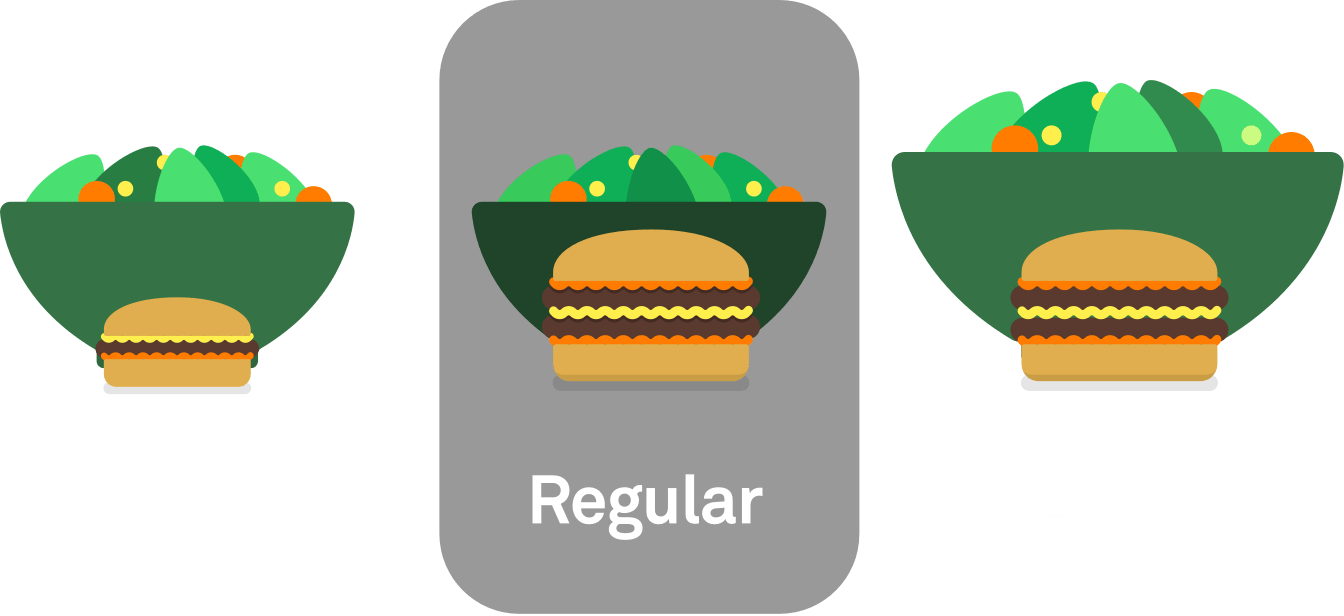
In this study, three different labeling systems were tested on warm dishes in the largest cafeteria at the University of Oslo. The first system was traffic-light labels with three symbols (red, yellow and green), the second system was a single-green label that only labeled the most environmentally-friendly dishes, and the third system was a single-red label that only labeled the least environmentally-friendly option.
For the single-green labeling format, only the vegetarian dish was labeled with the “Low CO2” sign. In contrast, the single-red labeling format exclusively marked the meat dish with a “High CO2” label. Posters were placed around the cafeteria, explaining the labeling systems and the climate impact of different food categories, but customers were not forced to read them. Outcome was measured by the sales share of meat, fish and vegetarian dishes. The intervention period was separated in two; the first 20 days (period 1) took place before Christmas holidays, and the next set of 22 days (period 2) took place after Christmas holidays.
The results were promising: the traffic-light labels reduced sales of dishes with land animals by 9% in period 1 but not in period 2. Overall sales share of fish or vegetarian dishes were not impacted. Single-green and single-red labeling had no effect on sales share of meat, fish or vegetarian dishes in period 1, nor in period 2.
Based on these results, the researchers concluded that a traffic-light label, in combination with information – in this case, posters – can reduce the consumption of land animals, at least in the short-term. The results suggest that the traffic-lights led to a switch from red choices to the yellow middle option: sales of the green-labeled vegetarian dish did not increase as much as sales of the middle yellow labeled fish dish.
We can interpret it as support for the compromise effect, meaning that the traffic-light labeling led to an increase of the middle option, and not to a switch to the more “extreme” green option. If that is so, we assume that offering a plant-based option as the middle option (such as tofu or as opposed to two extremes: meat on the one hand and vegetables on the other hand) should have the same effect, swaying potential animal food consumers to the plant-based middle option.
Another interpretation of the same result might be that meat-hungry consumers prefer fish proteins to pure vegetarian meals, and that the meat and fish dishes were considered more similar to each other than a vegetarian dish. If that is the case, we can assume that people won’t switch to the plant-based middle option and that we’ll need a different intervention.
Customers seemed to react favorably to the traffic-light label when first introduced, but their eco-friendly behavior declined over time and almost returned to the control period behavior after some months during period 2. These results could be evidence for customers developing “fatigue” for labels, and that the effect of the ecolabels in this study was only relatively short-lived. A notable strength of the study is that the researchers measured changes in actual purchase choices, rather than relying on self-reported behavior. In summary, as meat consumption has a significant negative environmental footprint, and more traditional policy interventions do not fully seem to capture peoples’ motivations when choosing what to eat, behavioral economics interventions can be a relevant future area of research and action.
Different ways of framing plant-based products can provoke different mental associations. This study looks at three different framings, and the further concepts and ideas they invoke.
One of the things that makes communicating a pro-veg*n food message so challenging is knowing that different people are driven by different motives. What’s more, different ways of framing a product could provoke different mental associations, which is important, because research has shown that the more associations a concept provokes, the faster information flows and is absorbed. More specifically, “being able to understand which type of communication activates which type of information in consumers’ memory [is] a competitive advantage for marketing communication efforts.”
This study sought to explore this subject further by studying how consumers react to three different framings of plant-based foods: sustainability framing, health framing, and information about substituted ingredients. 90 participants were recruited and roughly divided into three groups who would dive deeper into each framing. The participants were guided through the process of making concept maps and then interviewed further about their word choices and associations.
For their part, the researchers were looking at the responses – and the importance of the different concepts in question – through a series of analytical lenses: Is your concept a lone wolf? Does the concept make you think of many other concepts quickly?How close are the concepts? How far in terms of number of links you have to go to get from your concept to another? Does a concept fall between two unrelated concepts? Does it make other concepts that were unrelated to each other suddenly “talk”, the way the word “bank” links the world of money and the world of rivers? If your concept is taken away, does it leave an empty hole behind it?
Analyzing the results of these mind maps and interviews, the researchers found some similarities across groups. Firstly, regardless of group, people linked a plant-based diet with health, and most of those associations were positive. They also found that the processing of food was an issue, as well as the negative perception of the ingredients needed for it – people tended to be concerned about unnaturalness and “chemicals” associated with plant-based food subtitutes.
They also found some differences. People in the ingredient substitution group thought of fewer associations for that concept. Although substitution is a part of the trend of products that are transparent about the precise substitute ingredient, health and sustainability are the most common reasons people go veg*n. This analysis showed that talking about substituted ingredients may be a non-starter. Finally, the ingredient group directly linked to the concept of food being “expensive,” which was not present in the other groups.
Ultimately, the study was conducted to better understand how marketers could reach consumers. However, since many animal advocates find themselves in the position of “marketing” a veg*n lifestyle, the results can be picked up and used by advocates as well. Overall, the researchers found that framing a product in terms of health and sustainability leads to richer and more complex mental associations than simply communicating about substituted ingredients; furthermore, while health framing leads to product-centered associations related to things like nutritional quality and chemicals, framing a product in terms of sustainability leads to broader associations about the environment and authenticity. While it’s unlikely that many advocates would be able to conduct their own research in this vein, even these results taken on their own could be useful in future campaigns.
The more capable people are of taking a moment to reflect on their actions, the more likely they are to have a sense of meaning in life and to react to nature in a positive way.
Mindfulness is defined as awareness that arises through paying attention on purpose in the present moment in a non-judgmental way. With roots in Buddhist philosophy, it is the self-regulation of attention, as well as an openness and acceptance for all emerging inner experiences. The practice of mindfulness can include activities like meditation, but it’s also come to include a variety of things that people can practice as they move through the world.
Mindfulness includes five dimensions, as related to environmentalism:
1. Observing – the conscious experience of inner and outer stimuli such as sensations, cognitions, emotions, sights, sounds, and smells. This can strengthen sensitization for nature and increase the significance of alternative information and consumer behaviors.
2. Nonreactivity – the ability to allow thoughts and feelings to come and go, without getting caught up in or carried away by them. This can help regulate and resist temptation and impulsive behavior.
3. Acting with awareness – full attention and conscious behavior, including leaving the “automatic pilot”. This includes a requirement for self-knowledge and reflecting on life goals, and is positively linked to environmentalism.
4. Non-judging – to take a non-evaluative stance towards thoughts and feelings. This supports the active integration of experiences at a cognitive level, and can be a barrier for environmentalism because it might lower the activation of personal norms.
5. Describing – the ability to label internal experiences with words. This is crucial to putting experiences into a coherent frame of meaning, and is positively linked to environmentalism.
Some claim mindfulness has the greatest potential for transcending the self-centered focus in one’s behavior as a result of the conscious perception of one’s own feelings and needs. From there, the perspective is then widened to take into account the feelings and needs of other people and other living beings.
One study set out to test the relationship between mindfulness, meaning construction, and ecological attitudes, with the hope of attaining a final key result – sustainable food consumption. A total of 375 people participated via a standardized online survey, which included questions regarding mindfulness (observing, nonreactivity, acting with awareness, non-judging and describing), the construction of meaning, sustainability-related contents of meaning, personal norms and sustainable food consumption. The researchers concentrated on two different aspects in their measure of sustainability and food: organic, regional, and seasonal food, and vegetarian food.
What they found was that, although acting with awareness wasn’t found to be correlated specifically to veg*nism, acting with awareness was the only mindfulness property connected to sustainability actions. This can be explained by the fact that veg*nism is more strongly influenced by moral norms regarding animal welfare than by ecological norms.
Overall, when people stated that they notice sensation like smells and aromas, and that they’re good at finding words to describe their feelings, they found more meaning in life in general, as well as more meaning drawn from sustainability specifically.
Nonreactive people were likely to say that when they have distressing thoughts or see distressing images, they become calm soon after, notice and let them go without reacting, and don’t let themselves be carried away by them. These same people were also more likely to say that they feel personally obligated to buy sustainable food products as often as they can. It makes sense intuitively, since the ability to resist feelings evoked by commercials, marketing, and your own appetite does enable you to resist unhealthy or unsustainable temptations.
What’s more relevant and specific is that nonreactivity seems to relate to veg*nism while meaning is the missing link between them. Although the cause and the effect are unclear, when people develop the habit to stop and think rather than simply act upon their impulses, they develop a sense of greater purpose to life. When they experience a greater purpose, they’re more likely to go veg*n. This is why mindfulness practice is such a powerful tool for veg*n education. It helps practitioners pause for a moment before doing something they may morally regret.
For animal advocates, these studies, and many others like them, show ways that mindfulness practitioners might be good allies, and how mindfulness practice may help to encourage better consumption habits. Does mindfulness provide people a sense of meaning, which makes them more environmentally conscious? Are people who are more receptive to mindfulness in the first place also more receptive to sustainability? The answers are still not certain, but the questions are worth posing.
What these studies do tell us is that the more connected to their senses people are, and the more capable of taking a moment to reflect on their actions they are, the more likely they are to have a sense of meaning in life and to react to nature rather than to passing whims of appetite and taste. Mindfulness-based interventions are abundant – both in “the real world” (known as MBSR and MBCT) and now, on our cell phones (see examples: 1, 2, 3). Bringing mindfulness interventions into our advocacy could help to provide us with surprising future directions.