Translate while preserving the format with Max AI Me

You might know that I'm a strong advocate for Max AI Me, which is my favorite AI tool, always using the most up-to-date ChatGPT and Claude versions across various platforms including email, social media, and websites.

Today, I discovered an even more impressive feature in addition to changing the writing tone: it adds a button to translate web pages into your native language using AI, seamlessly integrating with the website's existing format, see screenshot. I highly recommend giving it a try!

The identified victim – what people really value

Dickert and colleagues (2015) demonstrated participants' preferences for donation allocation principles.

The question at hand was: Should donations increase linearly with beneficiary numbers, or should smaller groups receive more per person in a sub-linear fashion?

Participants overwhelmingly chose the linear function, rejecting the sub-linear option that aligns with scope neglect.

This finding strongly indicates that people fundamentally believe in the consistent value of saving lives, regardless of the number already saved.

Scope neglect is a product of our intuitive biases, not our deliberate, considered judgments.

Source: Effective Altruism and The Human Mind by Schubert and Caviola.

The power of friction

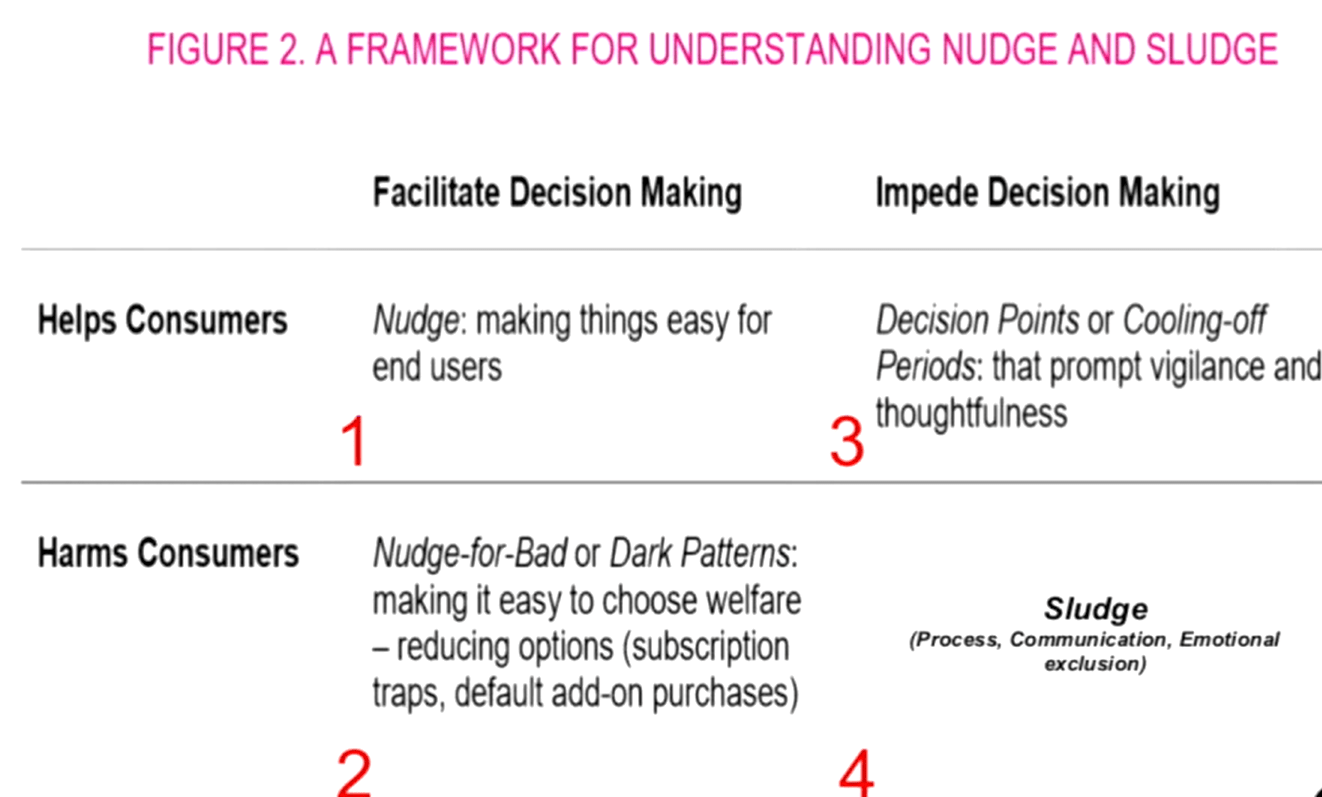
You would think that anything that delays the reaction is unproductive, but in fact, sometimes you would like to add intended friction or decision points to cool off, as you can see in this Nudgestock conference talk by Dilip Soman, from which the photo is taken (friction as a positive intervention is in 3).

– For example, you would not like people to divorce with a click. You would also like to hide the cookies from yourself on the top shelf or at least in a drawer. Or you would rather not buy them in the first place so that anytime you would like to eat one, you would have to go out and buy one.

– An option I like is a kitchen safe in case you would like to let your partner or your kids eat unhealthy snacks but not yourself. Alternatively, consider putting away phones during family dinners.

– The same applies to the One Sec app, which makes you take a deep breath before you open social media.

– One more creative idea is to tell a friend the password to your social media while hiding it from yourself. Another is the StayFocusd app, which has various modes, including a 10-minute timer and a nuclear option.

– An additional one is Stop Scrolling Newsfeed for Facebook.

The idea is simple: make the right choice easy to perform and the not-so-right choice hard to perform.

Willpower alone won't help you resist temptation when it strikes. Friction will.

Less is more – and more is less

Open tabs take a lot of time. The temptation to switch between tabs, especially when your task is confusing or boring, is immense.

By now, you may know how unproductive multitasking is. It takes 23 minutes to regain focus after a distraction.

But what if I told you that you can do less by doing more?

Enter Checker Plus for Gmail, Checker Plus for Google Calendar, Notifier for Whatsapp Web, Spotify Player, and Habitica Pomodoro SiteKeeper, in case your favorite way to distract yourself is a productivity website.

If anyone sends me a Gmail or WhatsApp message, I will know – I will get notified.

The same is true if I have a meeting later on, if I want to play music, or if I want to block a website like Facebook.

No need to switch between tabs for that.

I have gone to do some deep work; I will let you know how it is going!

Doom's Day habit app – Stickk – when everything else failed

You might have tried every single app to stick to your habits—Pomodoro, reminders, rewards—but there are times when everything else fails. What do you do then?

Enter Stickk – the Doom's Day accountability tool, logged to your payment method and making you pay for a charity you don't like.

Imagine the charity you don't like. That's the one you would have to pay, so don't lose your habit!

My own favorite way of getting myself to do things when nothing else worked, like waking up early: scheduling a post with an embarrassing detail about myself early in the morning. If I don't wake up to delete it, it will be posted.

Writers occasionally use a wicked writing app that deletes all their writing if they don't keep writing for a few seconds or minutes.

It all follows the same logic – you find someone who actually holds you accountable. These kinds of apps are not my first pick, but it works.

You can still use your career to help animals even if you don't work in charities – key insights from Animal Advocacy Careers

These are my favorite picks from the original article by Animal Advocacy Careers.

Many of us think of charities when we consider helping animals, but the article we read today suggests that advocacy is not limited to charities alone.

Advocacy can extend beyond the NGO space, and individuals can make significant differences for animals by using their careers in other fields. Some of these roles can even be more impactful than working in charities and can open up more career options. Some of the roles include:

Doing the same things – only outside of charities – like academia, government roles, and media to promote the inclusion of plant-based alternatives.

Companies that aim to replace animal products or improve animal welfare – for-profit organizations – can make an impact by outperforming animal products in quality, affordability, and convenience.

Earning and giving more – balance your goals and values without making a huge shift in your career.

Adjacent roles as a way to build career capital for future roles – allow you to build career capital that may be useful if you decide to continue your career in advocacy organizations.

The Zeigarnik Effect and Unfinished Tasks

Unfinished tasks are more memorable than completed ones because of the Zeigarnik effect.

And radio programs know that. They often use jingles that end on an unresolved note, giving the impression there's more to come.

Use the power of unfinished tasks to your advantage by concentrating on the tasks you need to finish. Divide tasks into smaller parts to achieve more thoughtful outcomes. Open by the end of the day the files you are going to work on tomorrow.

Want to make a lasting impression and be remembered? End your conversations with a cliffhanger. Start an exciting story, and then excuse yourself for an important phone call.

Good luck!

Because – The Power of Giving a Reason

According to a classic psychology study (the copy-machine study), providing a reason significantly influences the likelihood of receiving permission.

The study showed that when people were given a reason for a request, like cutting in line at a copy machine, they were much more likely to agree compared to when no reason was given. The type of reason, whether nonsensical or generic, did not make a significant difference.

While only 60% of participants agreed when no reason was given, for the other reasons, 94% agreed when a real reason (' I'm in a rush') was given, and 93% of participants agreed when a nonsensical reason was given ('because I have to make copies' – all of the people waiting in line had to make some copies…), which is nearly identical compliance.

However, the effect of giving a reason diminished when the request became more substantial, such as making 20 copies instead of five.

Overall, the research highlights the power of providing a reason, even if it may not seem substantial, as any reason tends to improve the chances of getting what one wants.

References:

Curiosity Daily through Snipd

The original study

Less is more

Less is more.
A study from Nature revealed that only 1 in 60 people would choose to remove a Lego brick to improve a structure, instead of adding one, instead of adding one (a highly recommended podcast, by the way!). In fact, people are more likely to add 9 extra bricks rather than take away just one.

Here are my productivity tips based on minimalism:
– Minimalism in your emails: Search for "Unsubscribe" in your email inbox and unsubscribe from any newsletters you don't read. Send each and every one of your inbox messages to the archive. Then, when a new mail arrives, archive it just when you have finished. This way, you won't be staring at your messages, overwhelmed.
– Minimalism in your calendar: Visit your calendar and remove one unnecessary notification from each recurring event.
– Minimalism in your to-do list: Go to your to-do list and eliminate one unnecessary reminder from every recurring task. Also, set up a monthly alert to clean it out.
– Minimalism on your desktop: Delete any shortcuts you don't use.
– Minimalism in your browser tabs: Close any tabs you don't need. If necessary, group them by right-clicking.
– Minimalism on your phone: Activate Do Not Disturb mode to silence unnecessary notifications.
– Minimalism in your apps: Uninstall any app you don't use.
– Minimalism in WhatsApp: Avoid joining or even leave irrelevant WhatsApp groups.
Learn to say no. Decline invitations to events, free but irrelevant webinars, and unnecessary meetings. Saying no is the ultimate productivity hack. Aim to under-commit and over-deliver.
– Embrace essentialism. Incidentally, I listened to "Essentialism" as an audiobook while on the move to avoid over-committing to new projects.

Have a productive day!

Top 5 Apps for Creating Healthy Habits – Supported by Science

Speaking of social psychology, how are you with habit apps (I love habits!)?

I have recommendations for a few.

Presently: Free. A beautiful and simple gratitude journal interface. In any case, this app is for the ones who prefer to keep it simple.

In my work life, I am focusing on altruism rather than positive psychology. Still, as a user, I think that conversing about what you are grateful for with a friendly AI like Pi (because of its inherent optimism) would do a better job.

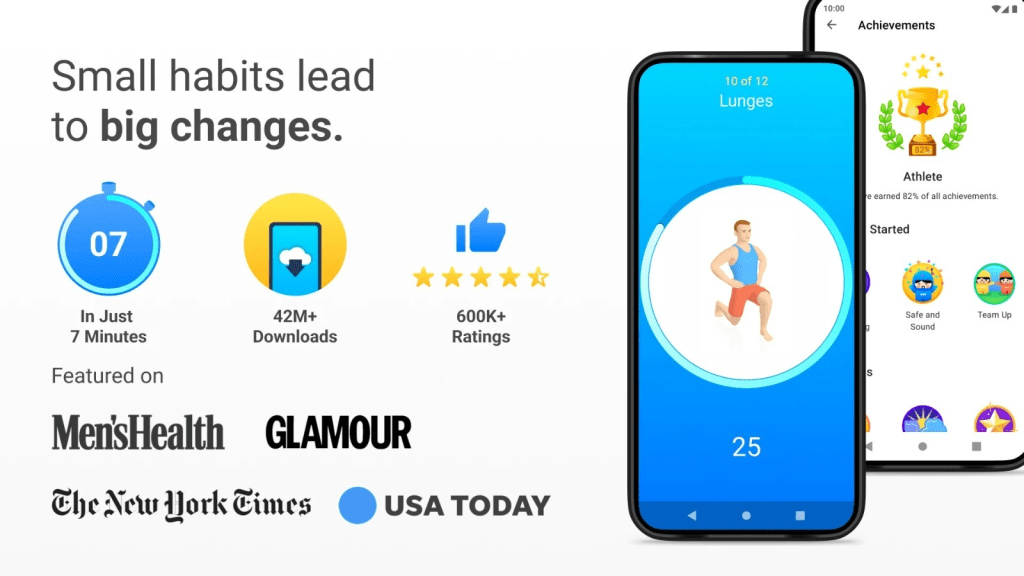
– Seven: Offers around 200 workout videos with clips, notifications, and streaks (consistency – meaning you need to not break the "chain", that's what works for me) – in just 7 minutes. Paid.

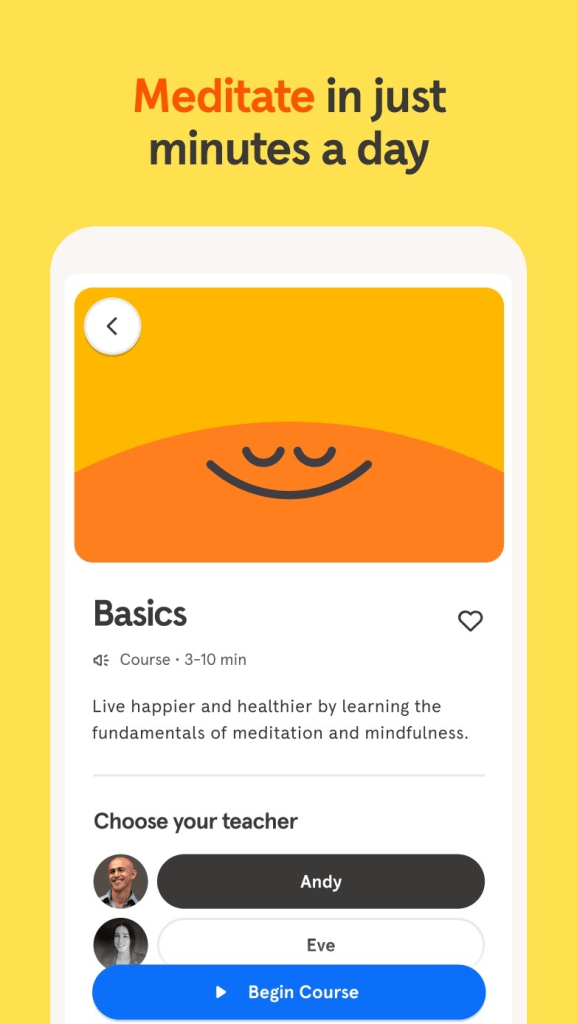
– Headspace – Backed by science, it offers many types of meditations with streaks starting at 3 minutes per meditation. Paid.

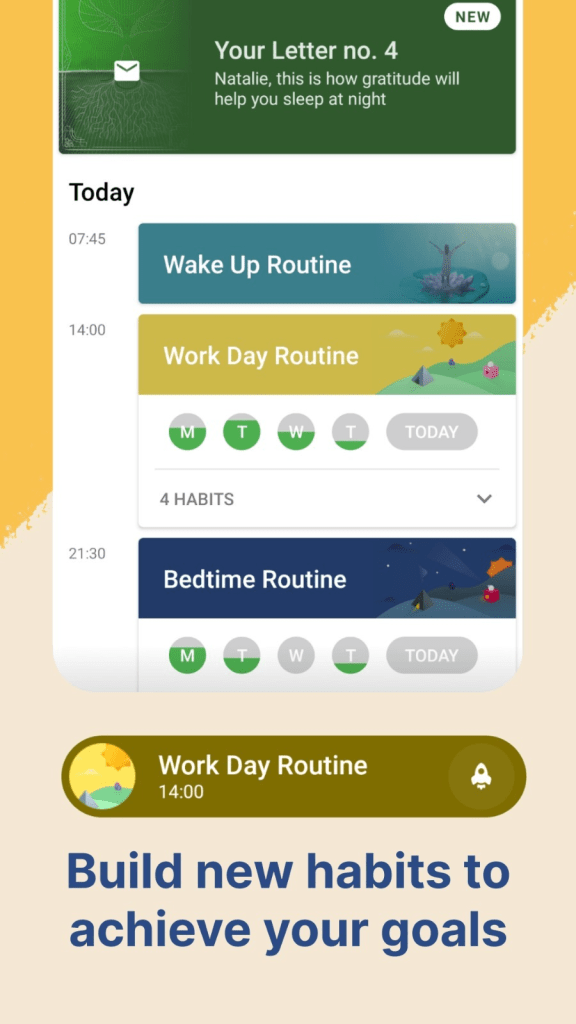
Fabulous -Last but not least, an app of apps based on science from Dan Ariely's lab has a beautiful and rich visual interface. Rest assured, all the social psychology interventions were applied to you (defaults, framing, streaks) to ensure you stick to your habits. Paid.